

About the UF-FSU CTSA

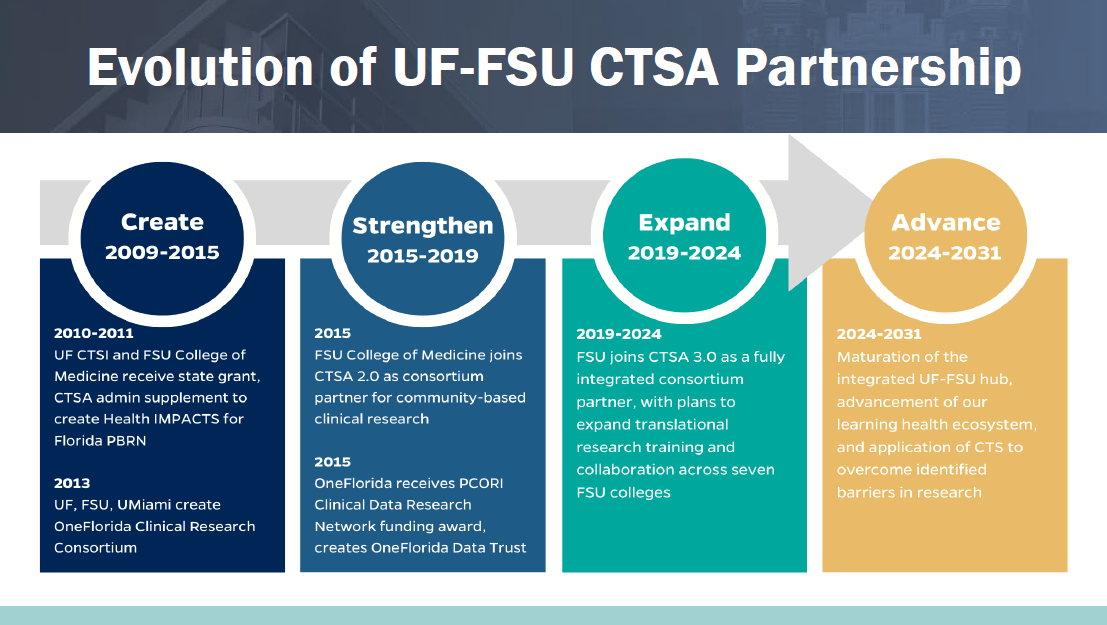
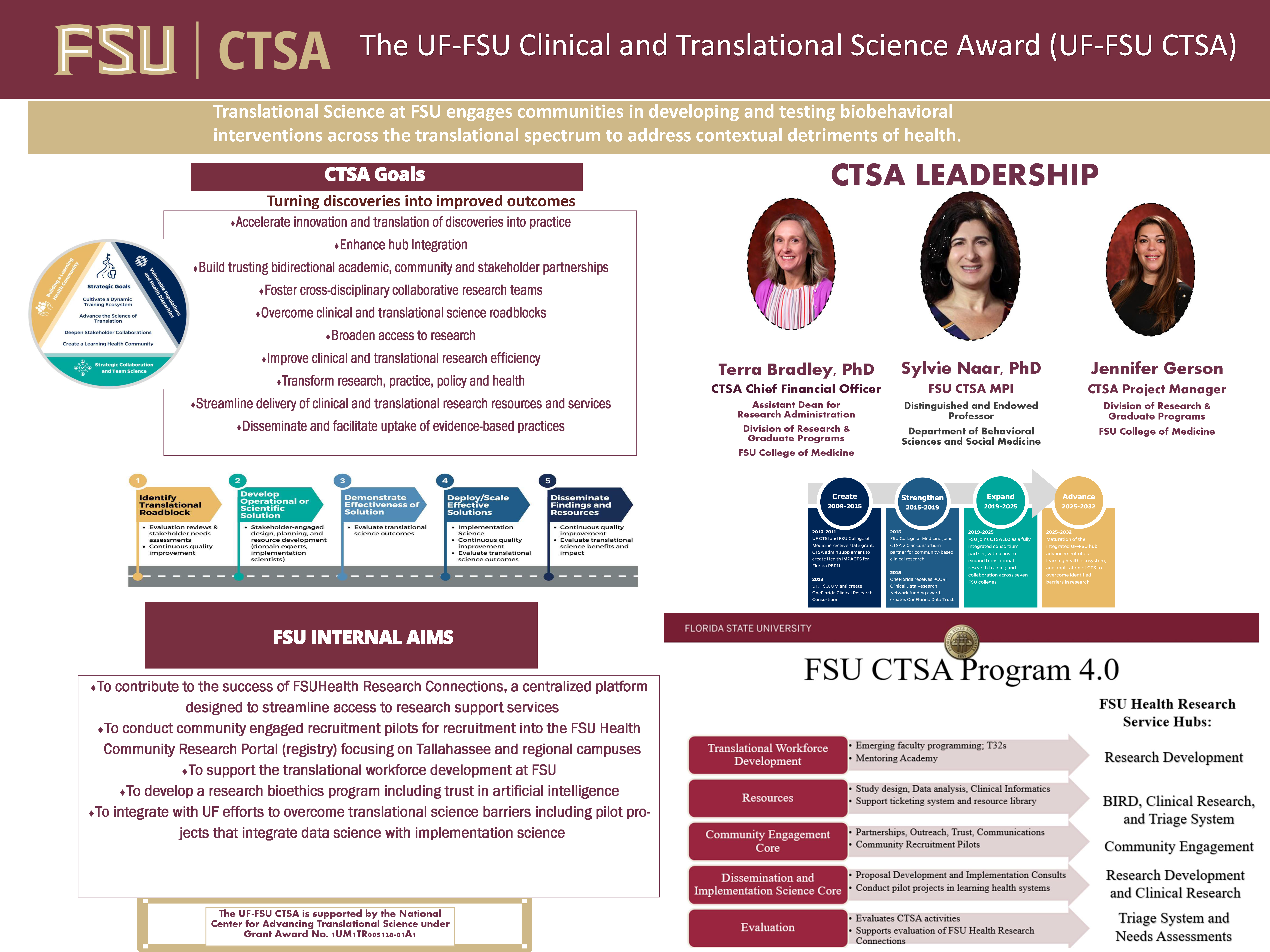
The UF-FSU Clinical and Translational Science Award (CTSA) Program hub is designed to develop innovative solutions that will improve the efficiency, quality, and impact of the process for turning observations in the laboratory, clinic, and community into interventions that improve the health of individuals and the public.
The UF-FSU CTSA hub is supported in part by three CTSA Program grants awarded on August 20, 2025 by the National Institutes of Health National Center for Advancing Translational Sciences (UM1TR005128; K12TR005129; T32TR005120). The UF-FSU CTSA hub is one of two hubs in Florida and is part of a national network of more than 50 hubs nationwide.
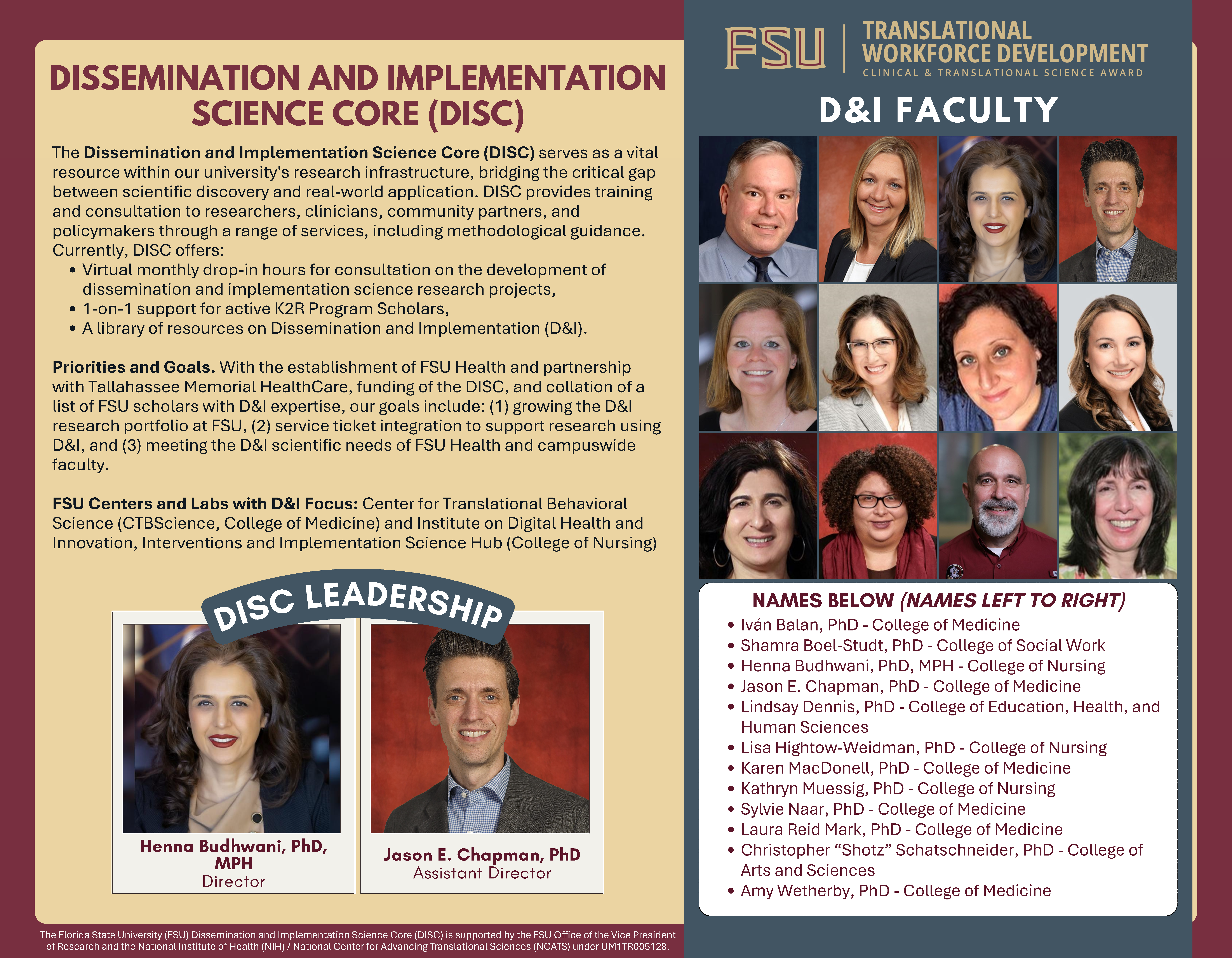
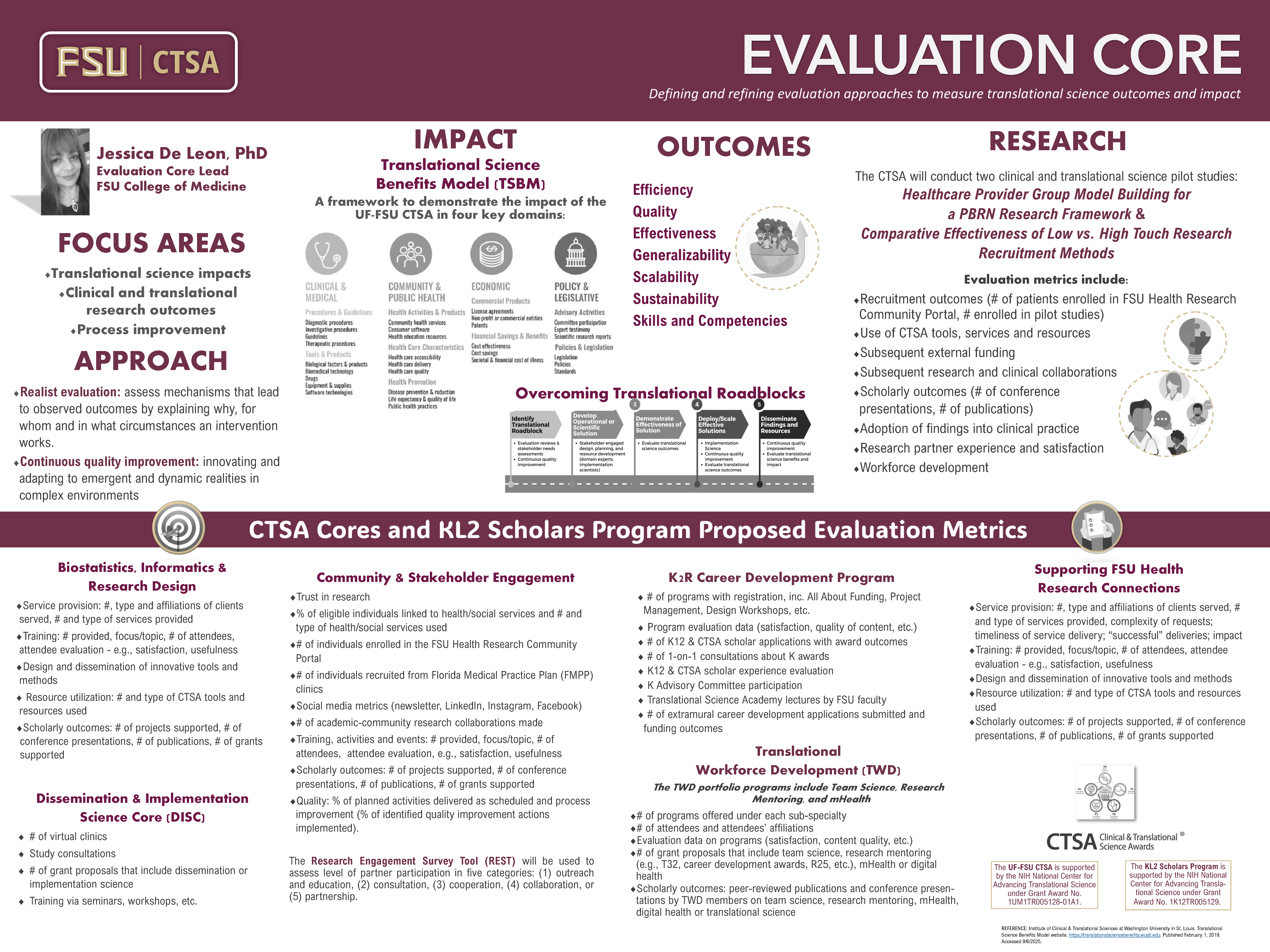
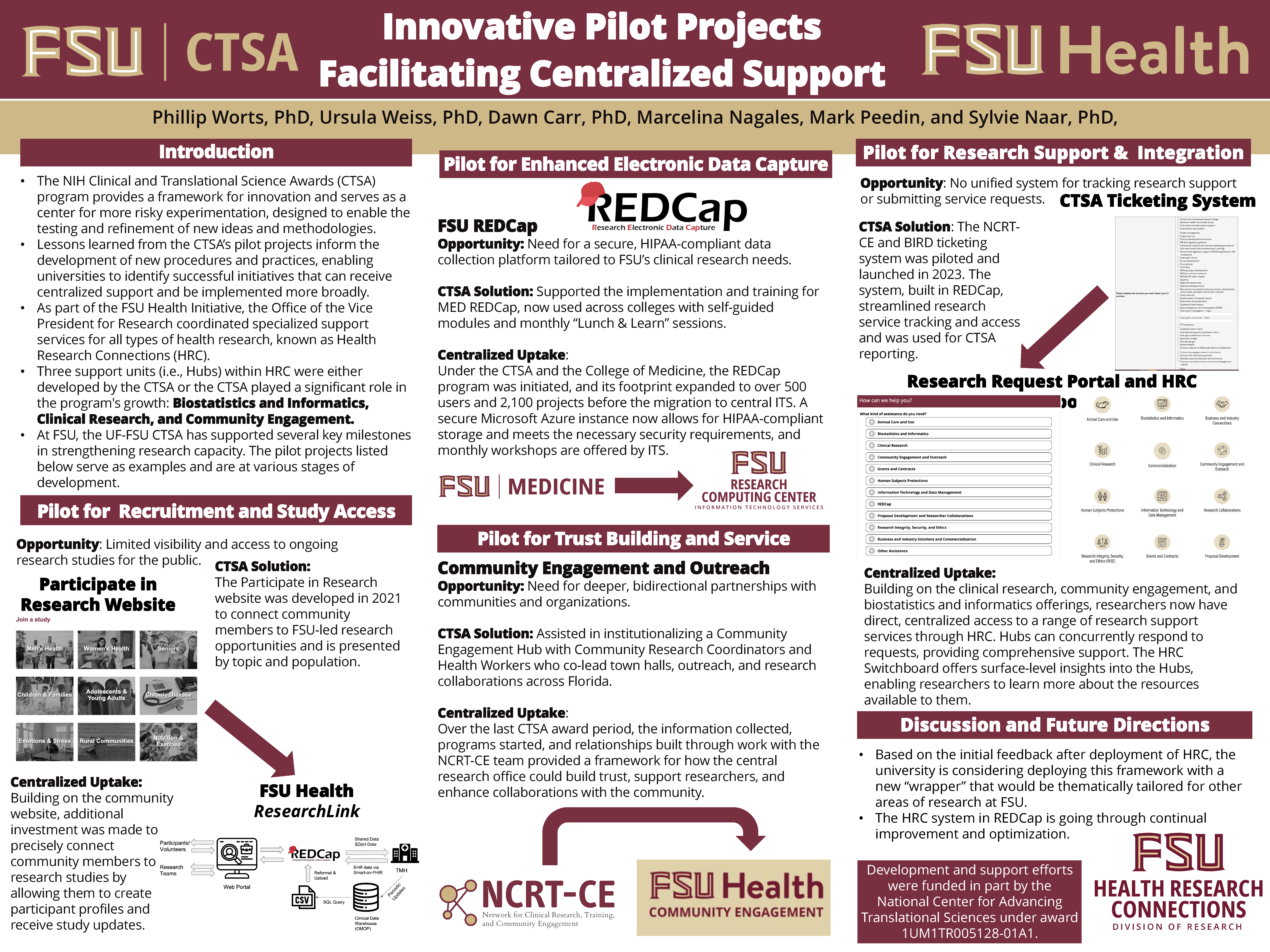
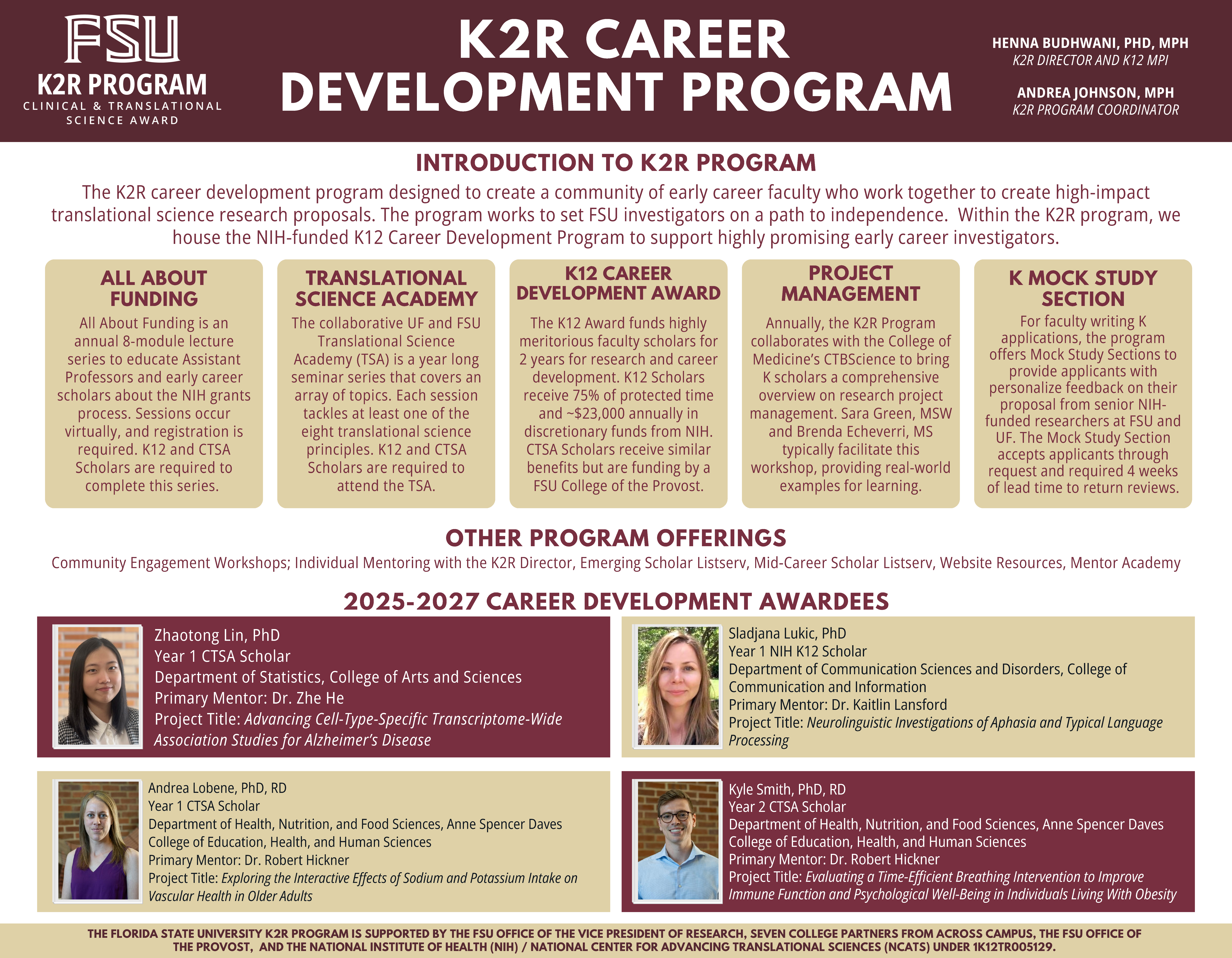
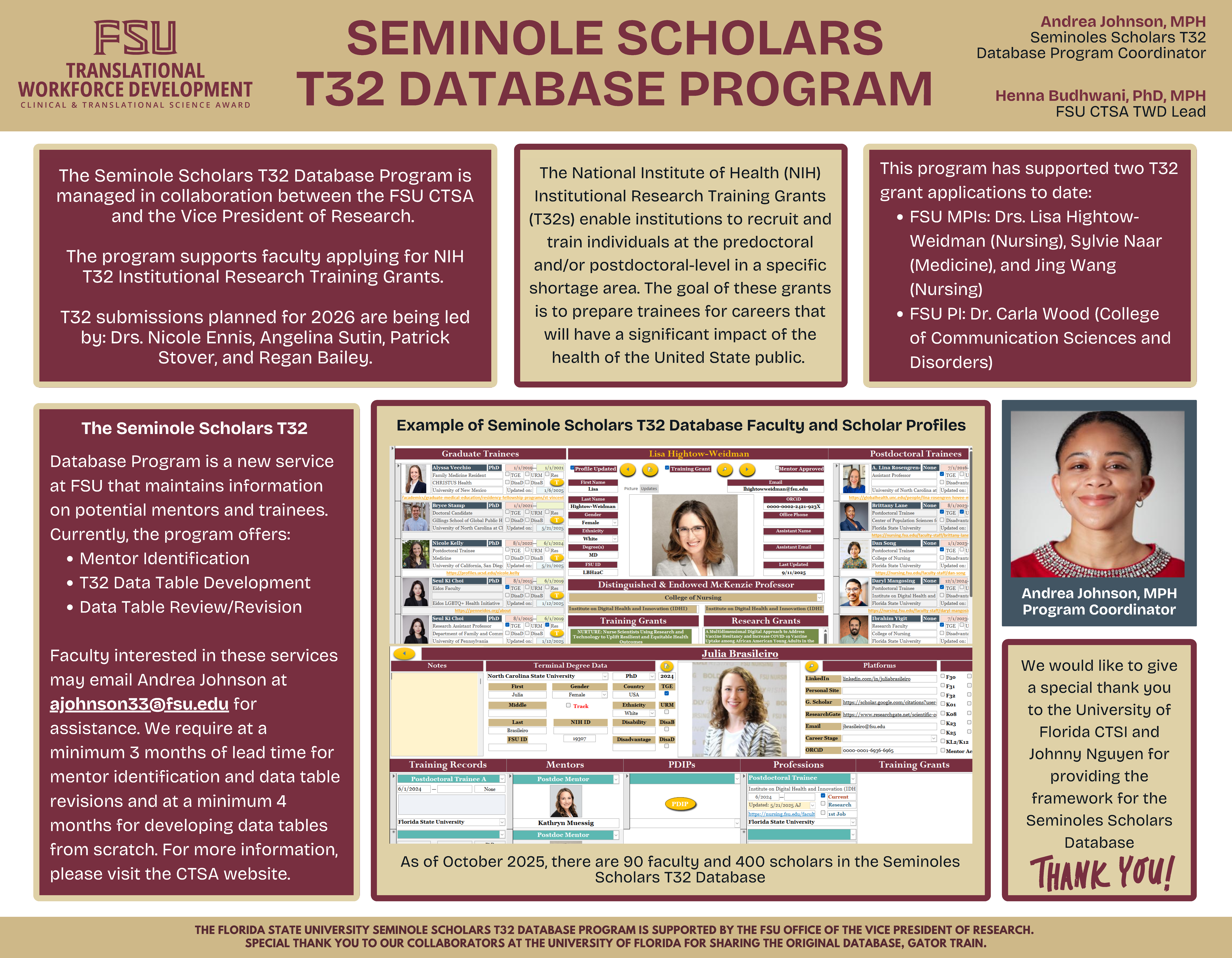
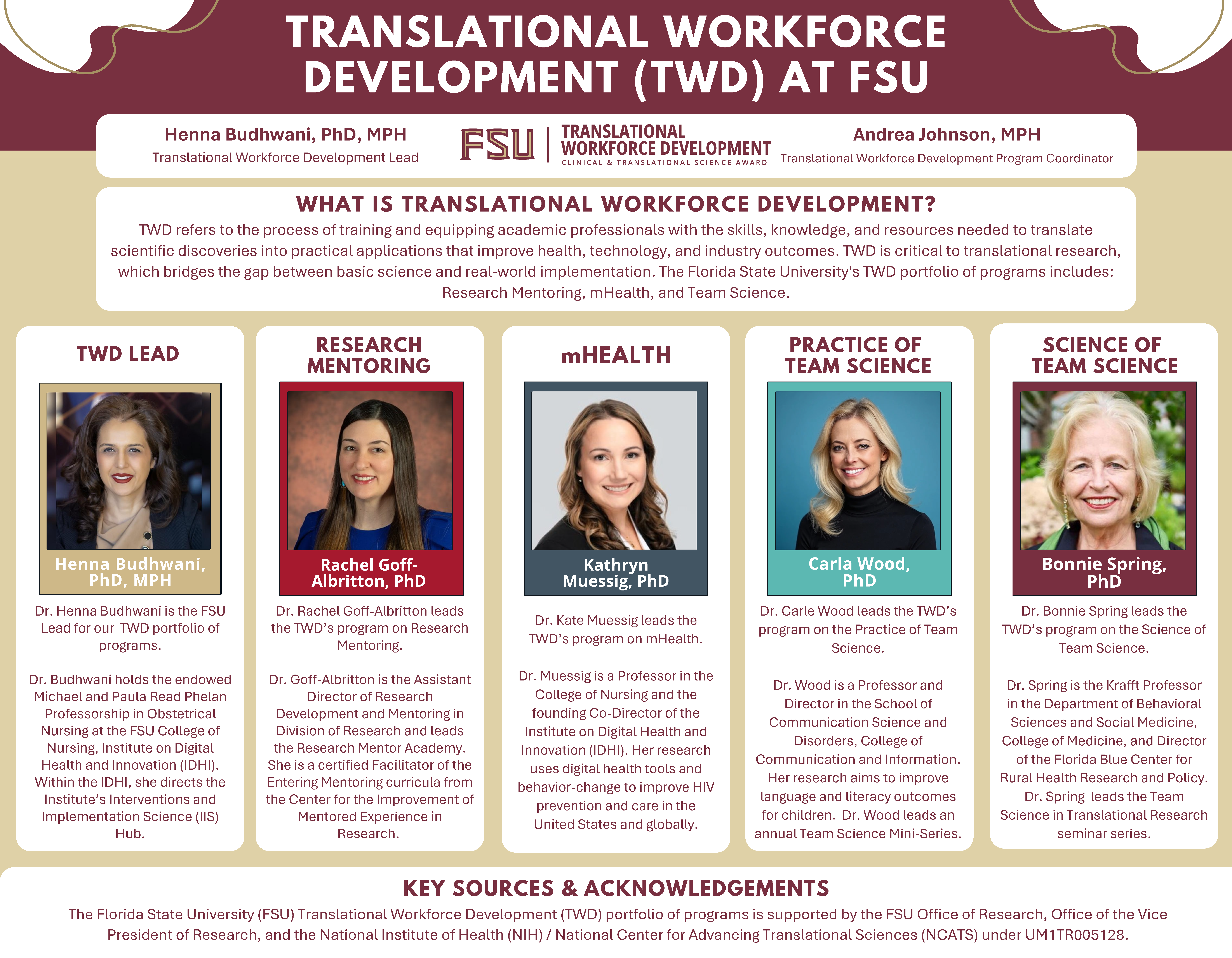
Click the posters below to learn more about the CTSA's programs, resources, and team members.
What does a CTSA hub do?
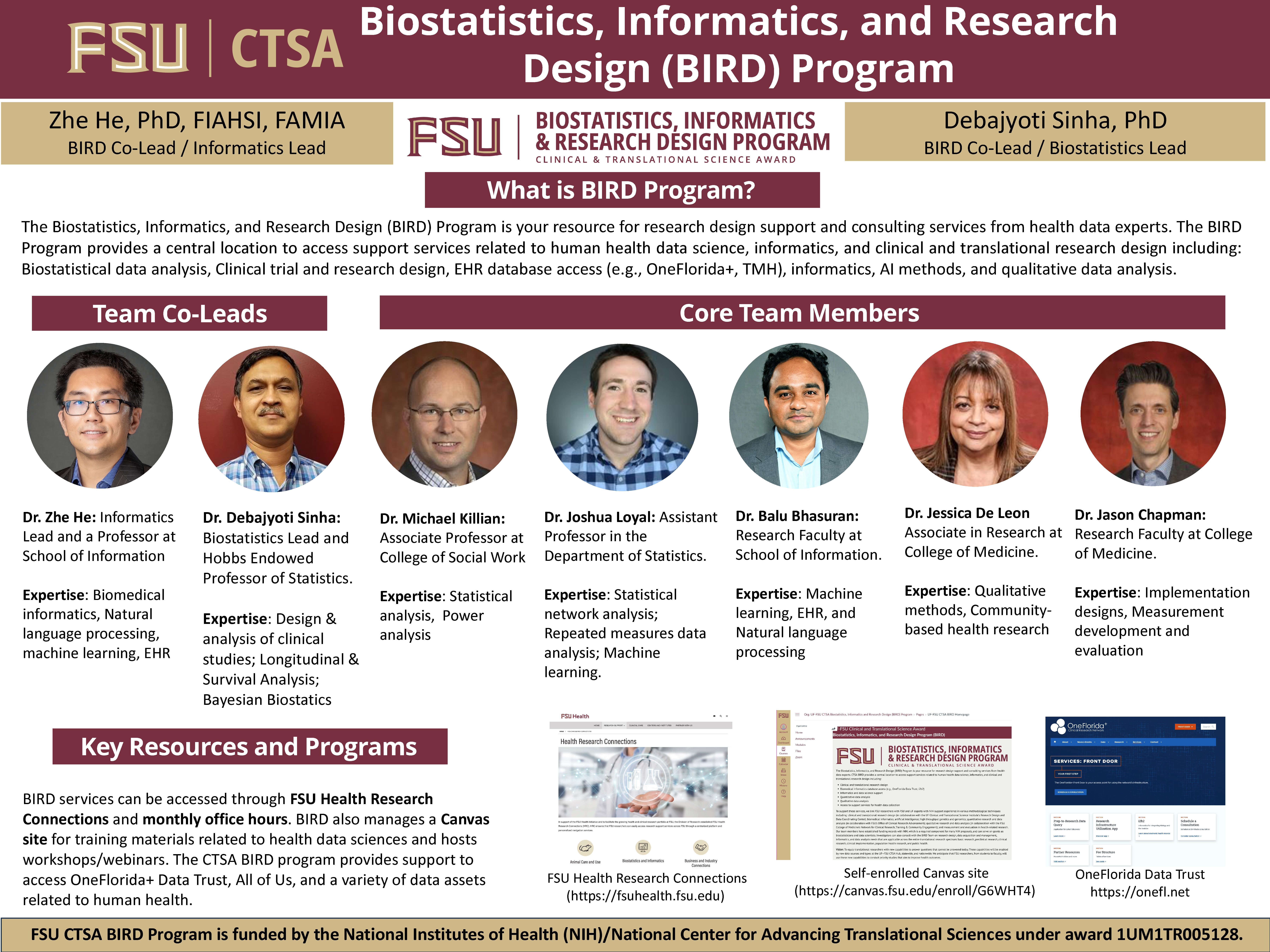
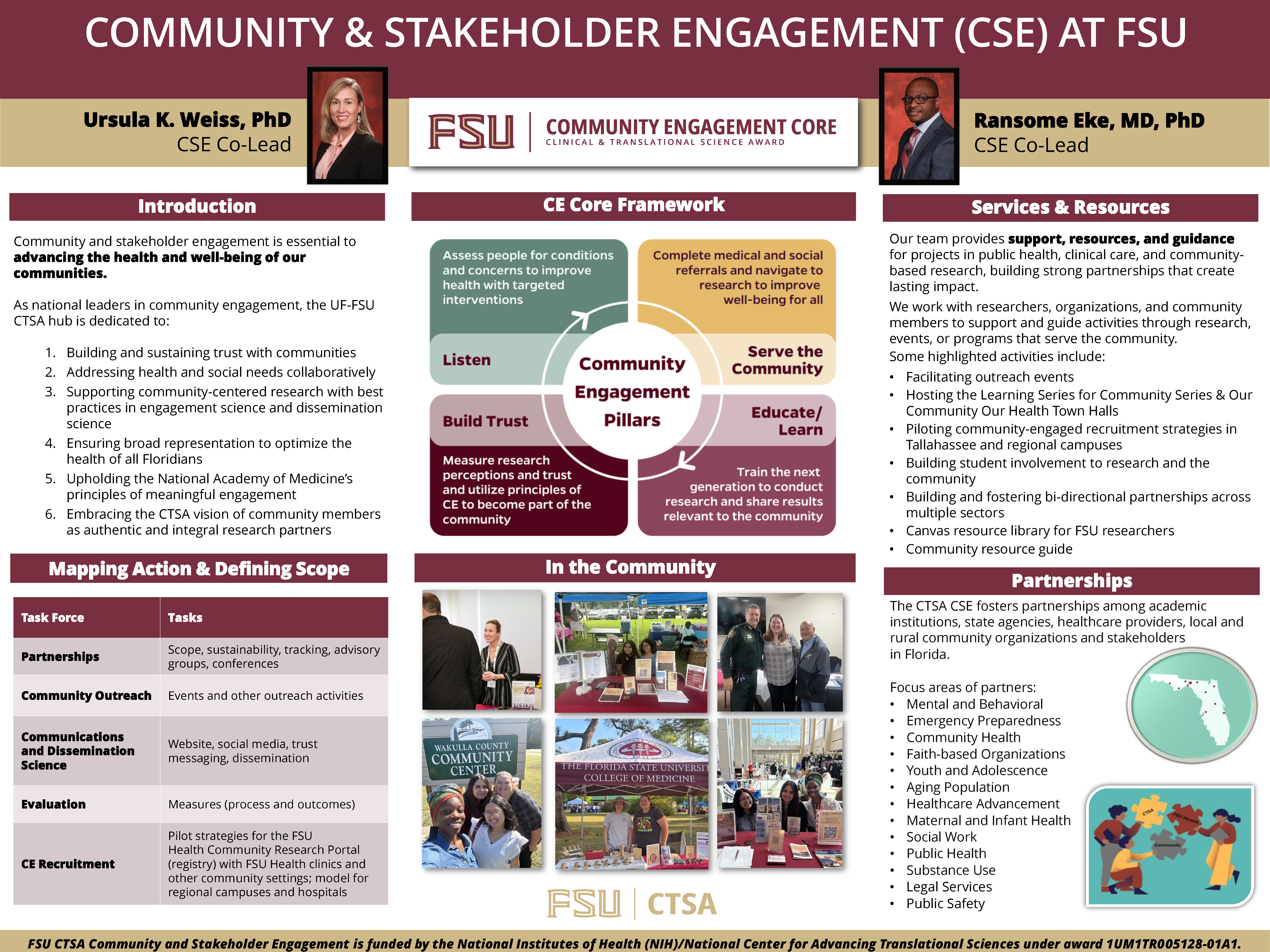
A CTSA Program hub is an integrated research and training environment for translational and clinical science that catalyzes the development, demonstration, and dissemination of methods and technologies that dramatically improve efficiency and quality across the translational research spectrum.
Are there other CTSA hubs?
Funded by the National Institutes of Health National Center for Advancing Translational Sciences, the UF-FSU CTSA Program hub is one of two hubs in Florida and is part of a national network of more than 50 hubs nationwide.
Strategic Goals & Key Initiatives
Together: Transforming and Translating Discovery to Improve Health (CTSA 3.0/UL1)
 Chart new pathways for developing the translational workforce
Key Initiatives:
- Extend and adapt CTSI Workforce Development models to foster a collaborative community of translational science scholars at FSU
- Blend institutional resources, team training and network interventions to foster team science in priority areas
- Expand collaboration with Florida’s historically black colleges and universities to create training programs with diversity themes
- Develop new training opportunities in informatics, community engagement, learning health system, research methods, regulatory science, precision health and network science

 Strengthen capacity of the learning health system environment and develop transferable models for embedding translational science into the clinical enterprise
Key Initiatives:
- Expand the development, demonstration and dissemination of high-impact pilots and clinical informatics with FSU, OneFlorida and CTSA partners
- Expand enterprise-wide Consent2Share implementation to UF Health Jacksonville campus and MyChart
- Evolve Personalized Medicine Program into Precision Medicine Program and expand beyond clinical pharmacogenomics, develop precision health capabilities at individual and population levels
 Expand statewide collaborations and opportunities to advance a participant-centered research agenda that reflects the health priorities and diversity of our catchment area and state
Key Initiatives:
- Lead OneFlorida, Precision Health and Network Science initiatives to expand data resources, multisite recruitment and research collaborations in priority areas
- Deepen engagement of special populations and stakeholders in UF-FSU catchment area and expand Citizen Scientist Program
- Strengthen dissemination to rural communities and policy stakeholders with UF/IFAS Extension, Florida Department of Health and Florida Medicaid
 Strengthen regional and national collaborations to accelerate the collective impact of the CTSA network
Key Initiatives:
- Develop advanced data capabilities and methods
- Catalyze new advances in precision health and network science
- Enhance multisite community engagement and trust, promote CTSA-PCORnet synergies and contribute to the CTSA Program’s national collaborative activities
FSU-Specific Goals and Impact
 FSU Mission
Translational science at Florida State University engages communities in developing and testing biobehavioral interventions across the translational spectrum to address sociocultural determinants of health
Cross-College Collaborations and Training for Translational Research
- Health sciences connected through FSU Translational Health Steering Committee and seed grants
- Development of Health Data Sciences Institute and Mood and Anxiety Center of Excellence
- Network for Clinical Research and Training supports FSU translational research centers
- Early career investigator training in translational science, team science, and development of four-year integrated research training for medical students